
Refurbishment & Dilapidation Works
Commercial Refurbishment and Dilapidations Guide
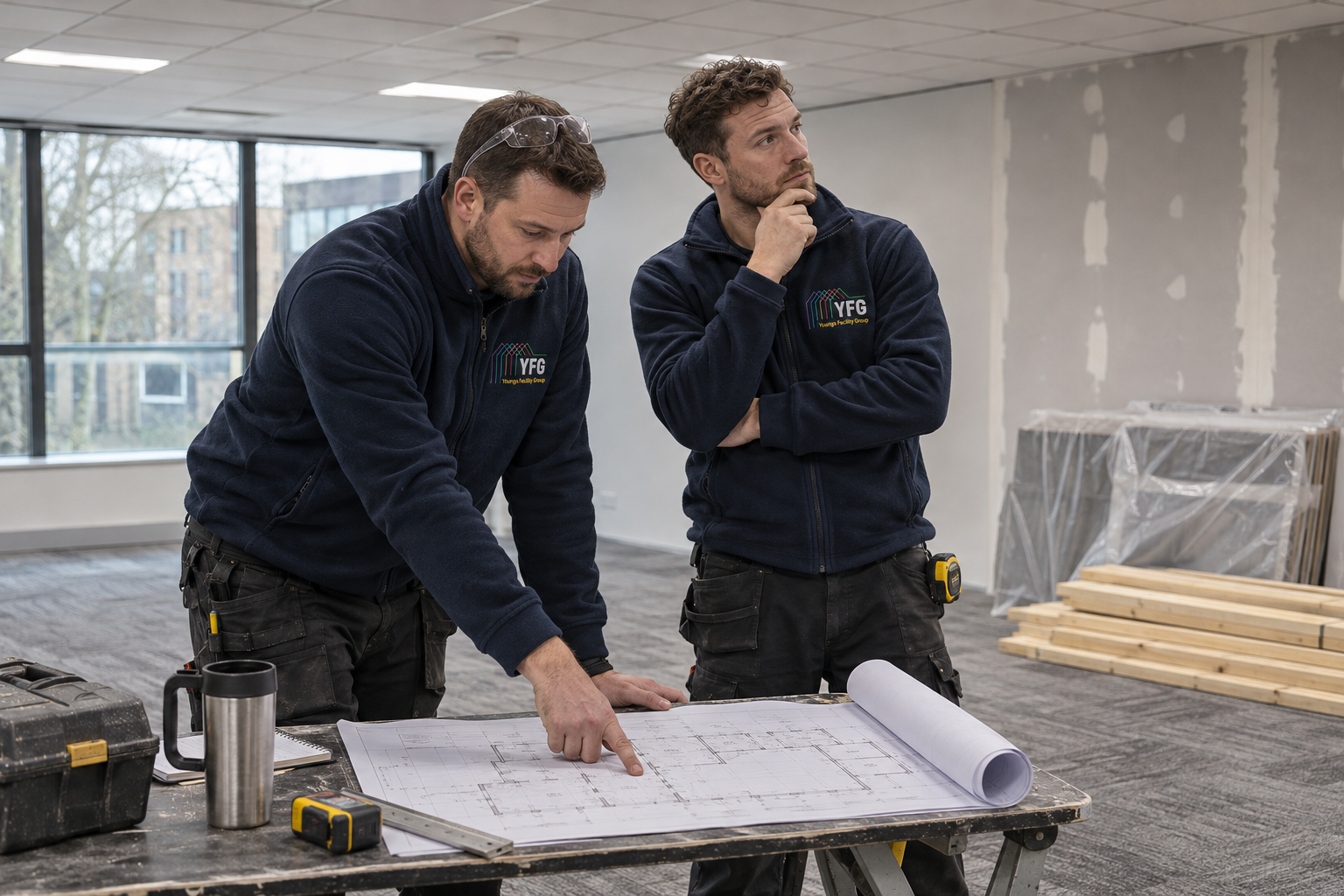
Refurbishment changes a building to suit its next use; dilapidation works usually concern repairs or reinstatement associated with a commercial lease. The two can overlap, but the contractual obligations and the work actually required should be established before a contractor prices them.
Youngs advertises commercial refurbishment and dilapidation works as part of its multi-trade service. Its maintenance background can help connect the visible finishes with the building systems, access and defects behind them.
01
What are commercial dilapidations?
Dilapidations are disrepair or reinstatement obligations arising under a lease, often considered as a tenancy approaches its end. The exact position depends on the lease, licences, schedule of condition and the circumstances of the property. A contractor's repair estimate is not a legal assessment of liability.
Youngs can price and deliver agreed physical works once the scope is defined. Have the relevant surveyor and legal advisers establish the obligations and review any claim, following the official dilapidations protocol.
Key point · 01“
A repair estimate is not a legal assessment of liability.
02
What is the difference between refurbishment and reinstatement?
Refurbishment improves or changes a space for future use, while reinstatement returns alterations to an agreed state. A project may include both, along with ordinary repairs. The same visible task can have a different commercial purpose depending on the lease and handover plan.
Youngs can coordinate building works against a clear schedule. Separate required repairs, optional upgrades and lease-related reinstatement in the brief so the buyer can approve each cost deliberately.
Key point · 02“
Refurbishment improves a space; reinstatement returns alterations to an agreed state.
03
When should we start planning lease-end works?
Start early enough to review the lease, survey the property, agree scope and allow for procurement, access and unexpected defects. Leaving everything until the final weeks can restrict choices and make phasing difficult, especially if the building remains occupied.
Bring Youngs into the delivery planning once the surveyor has identified the physical works. A site review can establish lead times, enabling works and the order in which multiple trades must operate.
04
Can an office be refurbished while occupied?
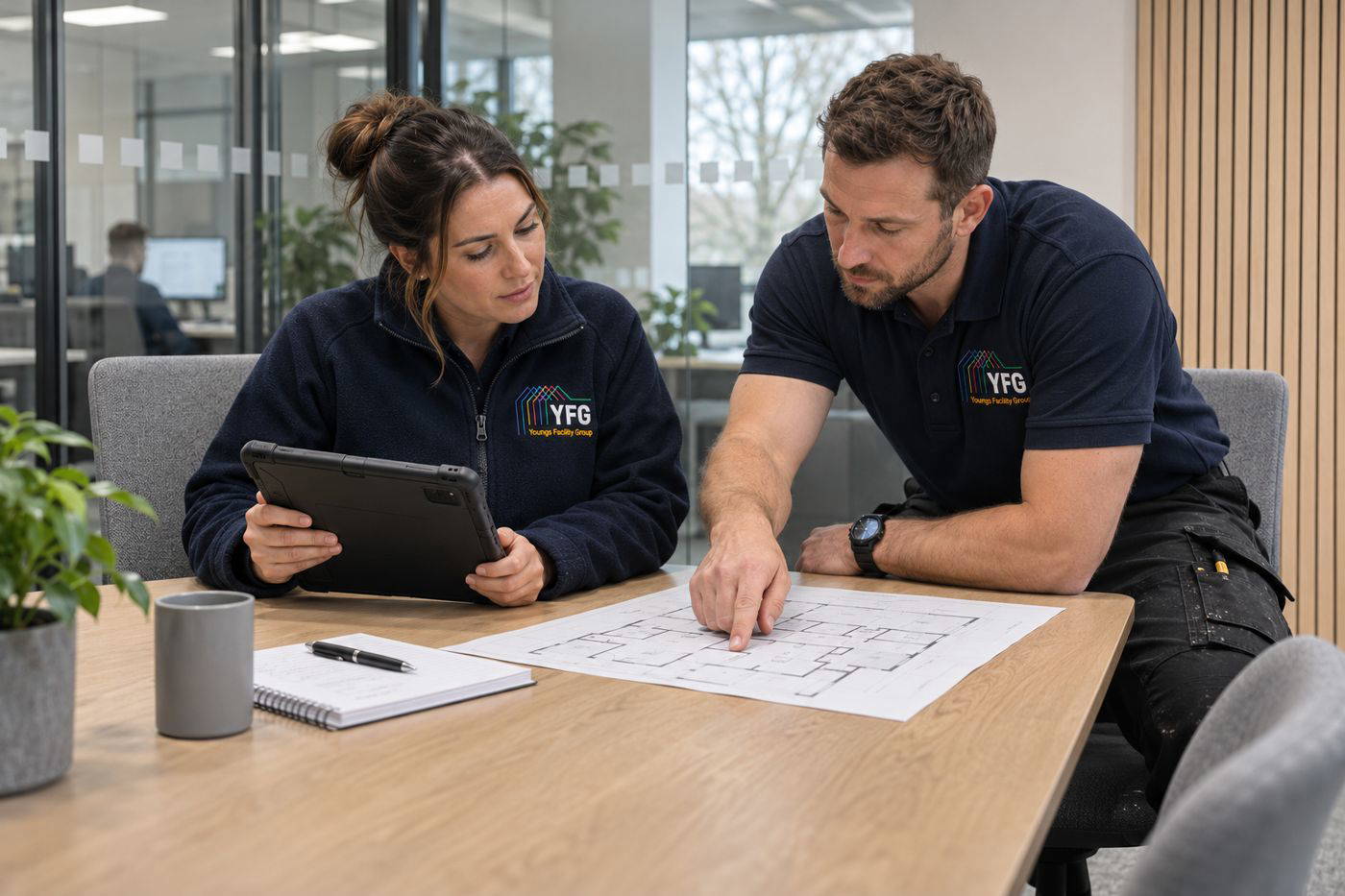
Often, with a phased programme, safe segregation, clear access routes and agreed noisy or disruptive work periods. Temporary services, moves and cleaning between phases may be needed. A schedule should show what space is unavailable at each stage.
Key point · 04“
Occupied offices can be refurbished in phases with safe segregation.
05
What does a commercial refurbishment quote need to include?
A useful quote defines drawings or schedule of works, materials and finishes, surveys and assumptions, protection, access, disposal, testing, making good, programme and exclusions. It should say how concealed defects and client changes will be priced and approved.
Youngs can quote against a defined brief. A walk-through with the decision maker helps distinguish essential repairs from optional improvements and reduces ambiguity at handover.
Key point · 05“
A quote should say how concealed defects are priced.
06
What hidden problems can delay refurbishment?
Concealed water damage, unsuitable substrates, outdated services, missing drawings, restricted access and long-lead materials can affect the programme. Some older materials require specialist assessment before disturbance. A preliminary survey reduces uncertainty but cannot reveal everything without opening up.
Youngs can identify visible conditions and coordinate further investigation within the agreed scope. Include a decision process and contingency for discoveries, with approval before additional work proceeds.
Key point · 06“
A survey cannot reveal everything without opening up.
07
What should be checked before handover?
Review the agreed schedule against completed work, inspect finishes and operation, close defects, collect relevant test records and confirm any training or keys. Record variations separately. Photographs are useful evidence but should not replace functional checks or required documents.
Youngs can agree a practical handover checklist with the client at the start of the project. For lease-end work, make sure the surveyor or authorised representative can review the result before the deadline.
08
Can a refurbishment improve future maintenance?
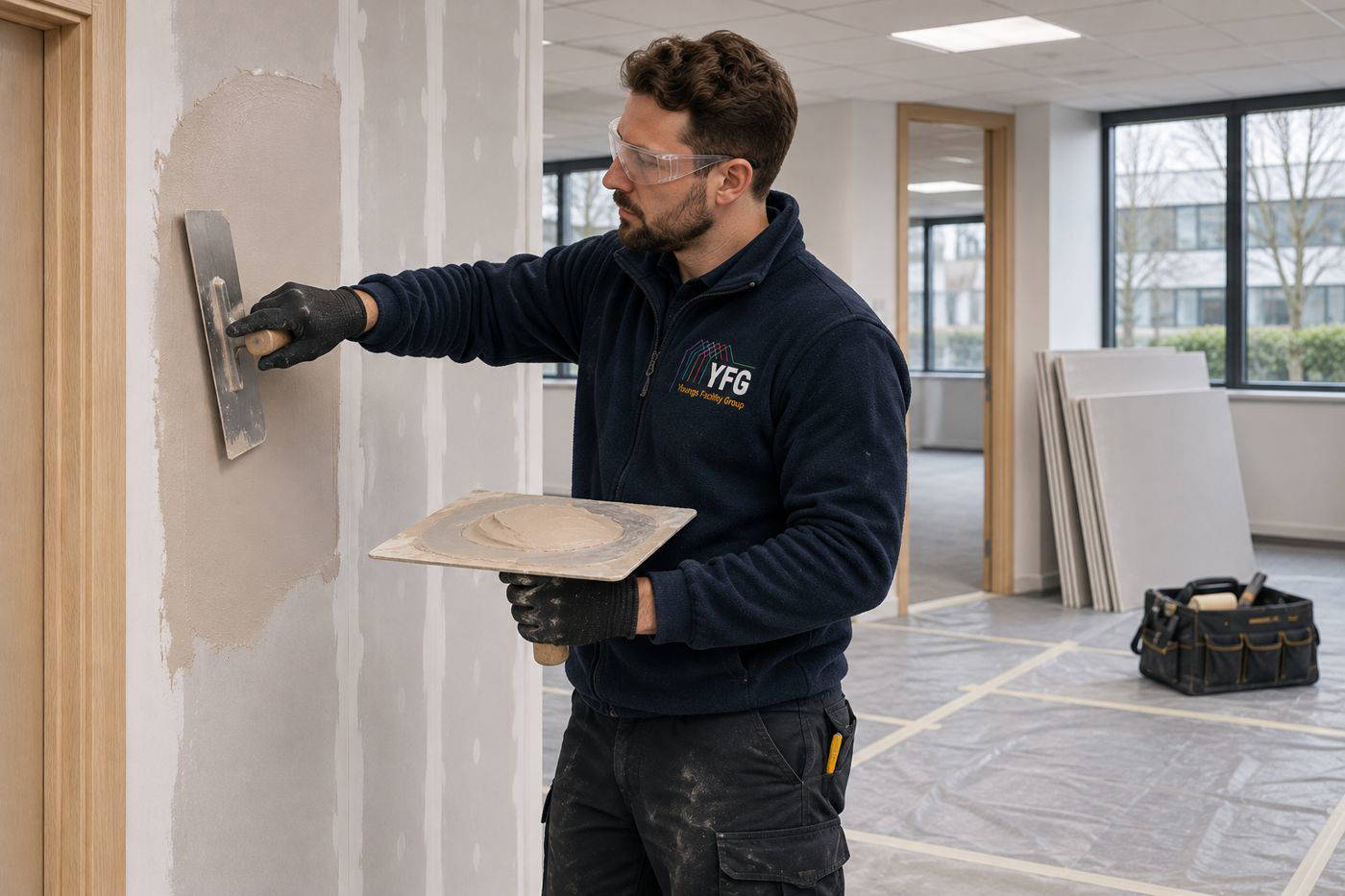
Yes, if the project provides accessible services, suitable finishes, clear labelling and accurate records. Replacing a worn surface without resolving leaks or poor access simply transfers the problem to the next maintenance budget.
Youngs' ongoing hard FM perspective can help identify recurring defects while planning refurbishment. Ask which project decisions will reduce future call-outs and how new assets will be added to the maintenance register.
Key point · 08“
Accessible services and accurate records improve future maintenance.