
Building Fabric Maintenance & Carpentry
Building Fabric Maintenance and Carpentry Guide
Building fabric is the physical envelope and internal finish of a property: walls, ceilings, roofs, partitions, doors, joinery and other built elements. Small defects can become safety, security or water-ingress problems if they are left to spread.
Youngs combines building fabric maintenance and carpentry with its mechanical, plumbing and flooring services. This is useful when a system repair also needs access through the building and careful reinstatement afterward.
01
What is building fabric maintenance?
It is the inspection, repair and upkeep of the non-plant parts of a building. Typical tasks include damaged walls and ceilings, door frames, skirtings, partitions, fixtures and weather protection. The right scope depends on whether the issue is cosmetic, operational or a sign of a deeper defect.
Youngs' service page names general fabric repairs and day-to-day works in commercial and public-sector buildings. A sensible plan records defects by location and severity so that a small repair is scheduled before it obstructs use or causes further damage.
Key point · 01“
Record defects by location and severity.
02
Which carpentry repairs are common in commercial buildings?
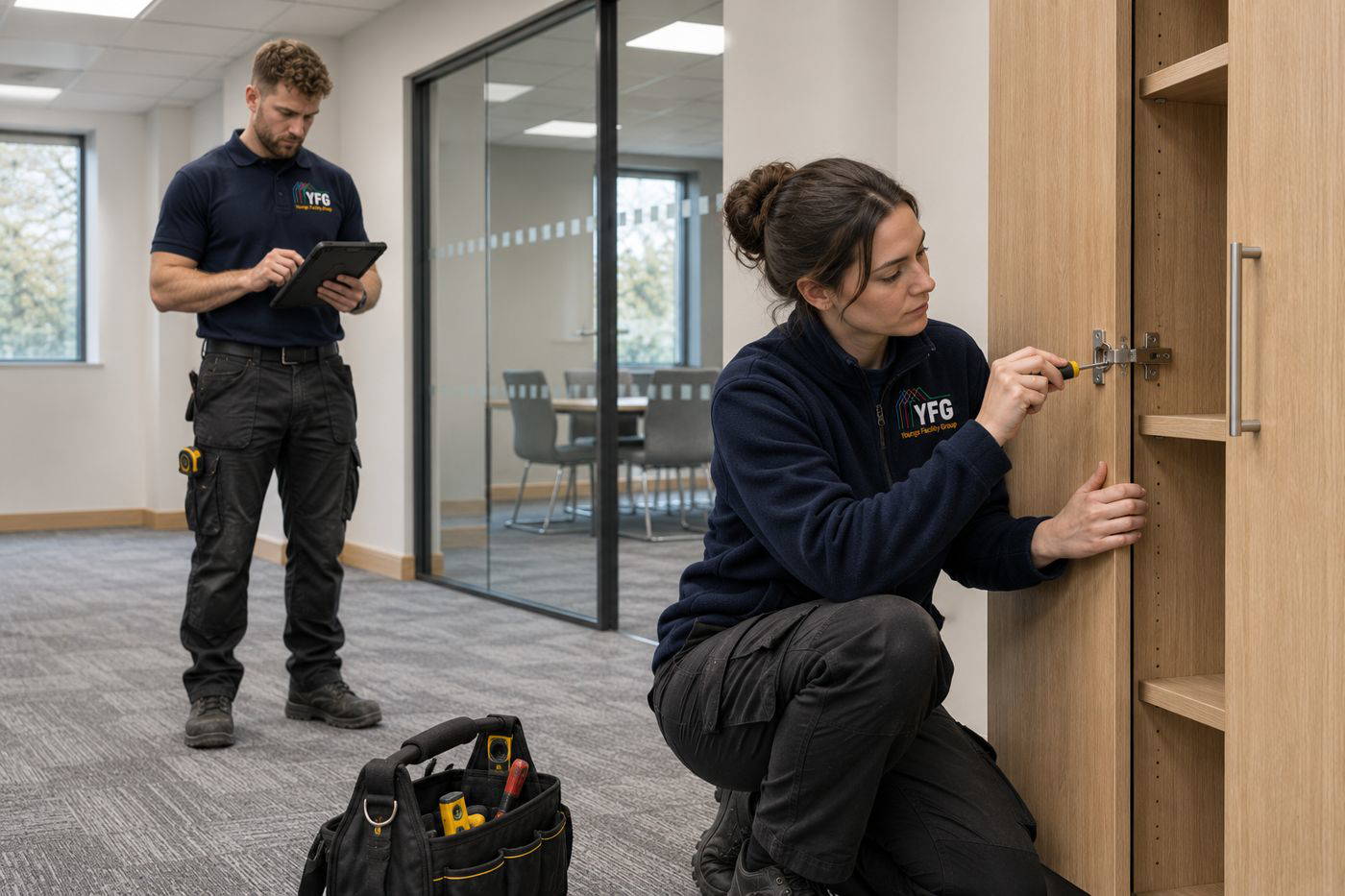
Doors that bind, loose ironmongery, damaged frames, worn counters and broken built-in fixtures are frequent examples. In schools and busy workplaces, high-use areas may deteriorate faster than quieter rooms. The repair should address why a fitting failed, not just hide visible damage.
Youngs' carpentry service can be included in an ongoing maintenance visit or a defined project. Send photographs, dimensions and any security or fire-door information in advance, because a like-for-like cosmetic repair may not be appropriate for a safety-critical assembly.
Key point · 02“
A repair should fix why a fitting failed, not hide damage.
03
How do you prioritise fabric defects?
First address immediate hazards, water ingress, insecure openings and defects that prevent a space being used. Then consider deterioration, user inconvenience and the cost of bundling work into a planned visit. Condition and risk are better guides than the age of a defect alone.
Youngs can help turn a walk-round list into urgent make-safe items, short-term repairs and longer-term upgrades. Record temporary measures and the date of permanent rectification separately so a closed ticket does not conceal unfinished work.
04
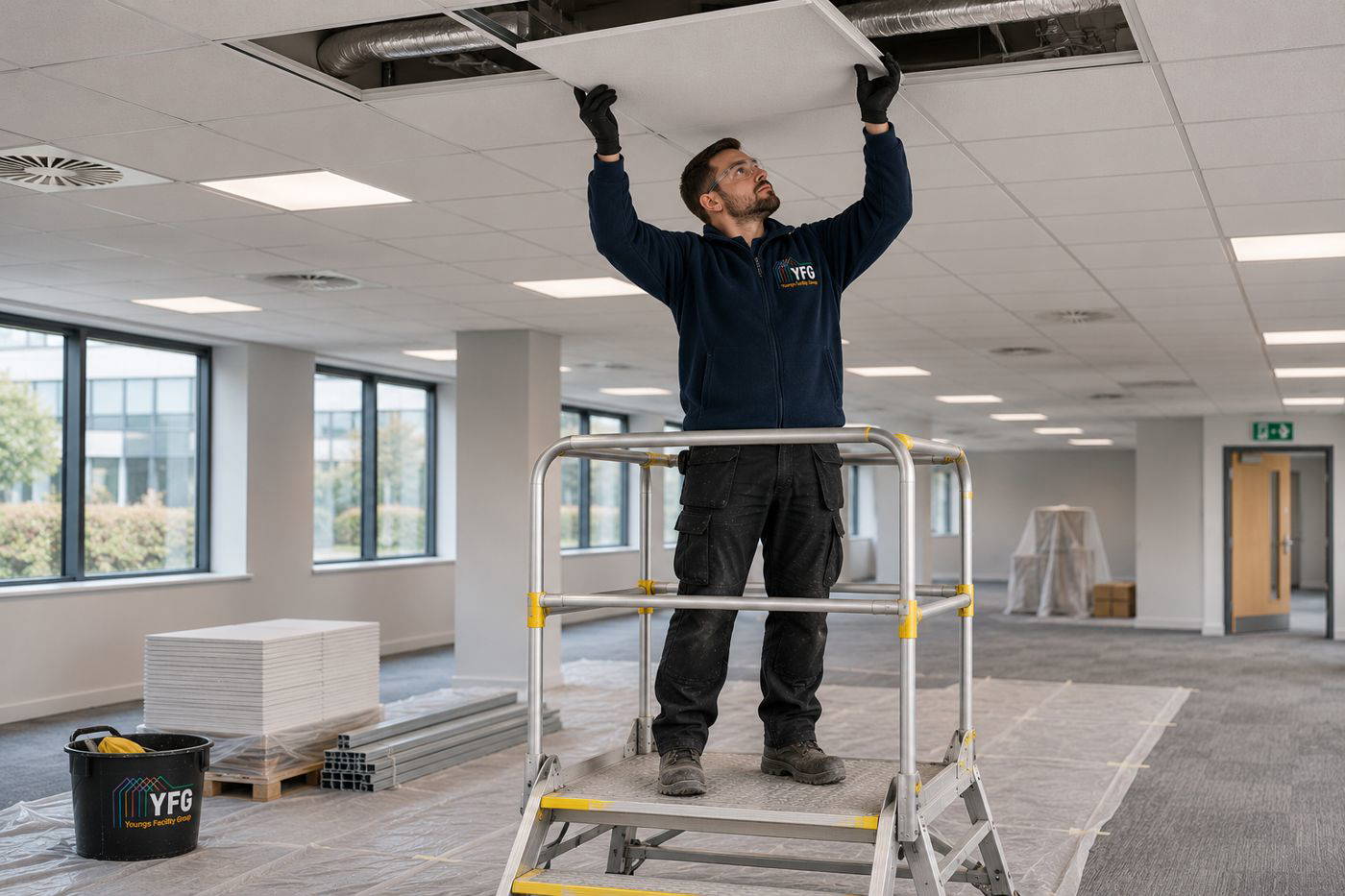
Can you repair a wall or ceiling after a leak?
Usually, but the water source should be repaired and the affected area assessed first. Replacing a stained board without addressing moisture can lead to repeated damage, mould or concealed deterioration. Electrical fittings and specialist materials may also need attention.
Youngs can coordinate the plumbing or building-services investigation with fabric reinstatement within an agreed scope. Ask for an estimate that identifies opening up, drying or assessment, replacement materials and finish, rather than assuming a surface patch completes the job.
Key point · 04“
Repair the water source first, then the damaged wall or ceiling.
05
What does planned fabric maintenance involve?
A plan can include periodic checks of roofs and rainwater goods, internal finishes, doors, joinery and known high-wear areas, followed by a prioritised repair list. The interval should reflect site use, exposure and known defects. Some inspections require specialist access or competent surveyors.
Youngs' broader hard FM model allows fabric defects to be reviewed alongside system maintenance. Shared reporting helps a property manager spot patterns, such as recurring damage around one entrance or water staining below a roof junction.
Key point · 05“
Shared reporting helps property managers spot recurring patterns.
06
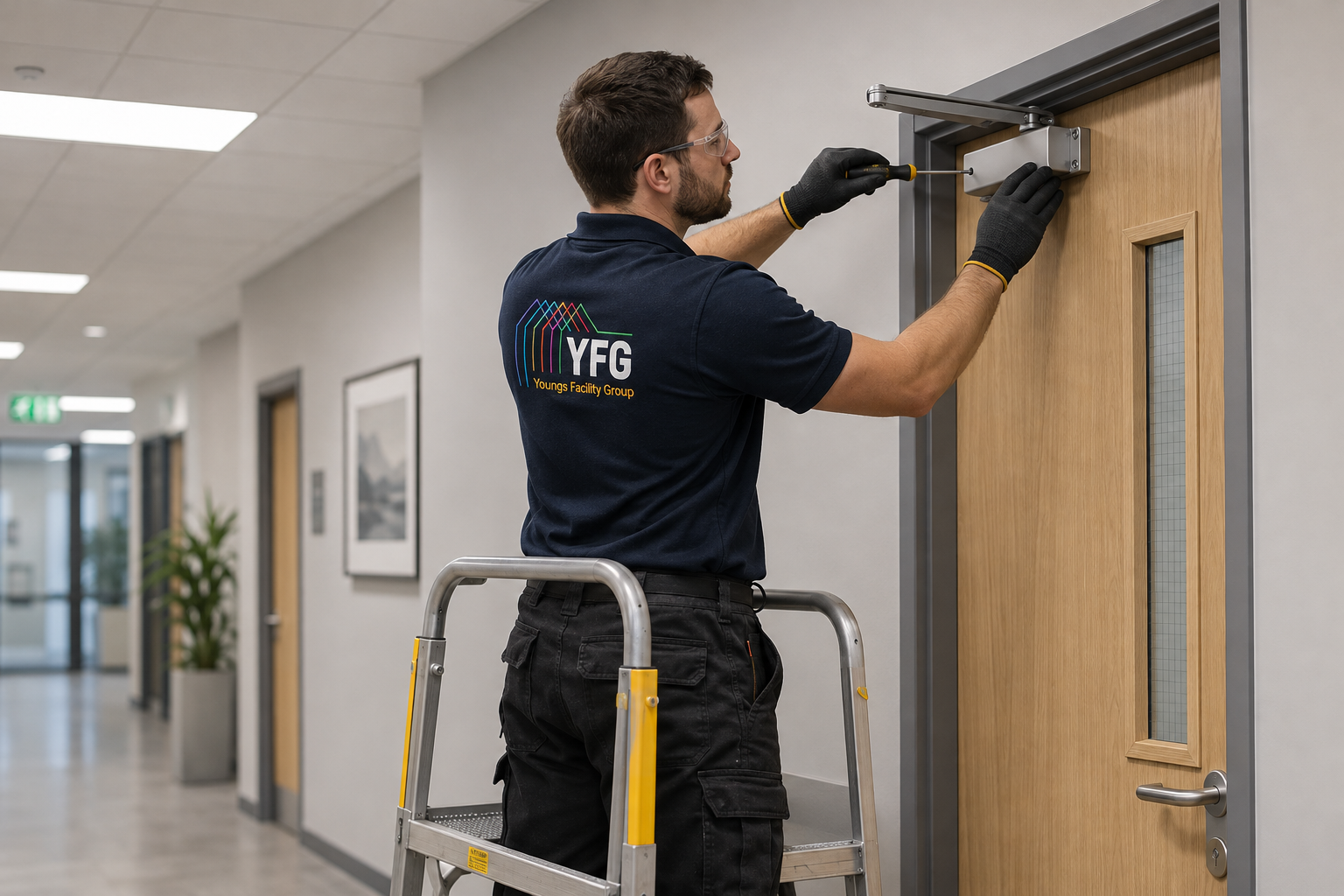
Is a damaged fire door a carpentry job?
Fire doors are safety-critical assemblies, including the leaf, frame, seals, glazing, closer and ironmongery. A damaged door should be assessed against the applicable fire strategy and maintained by competent people using suitable components; ordinary joinery fixes can compromise performance.
Youngs can discuss the fault and appropriate route within its door and fabric services, but the guide should not imply a specific fire-door certification it has not confirmed. Give the team the door location, label or records, photos and any immediate security concern.
Key point · 06“
Fire doors are safety-critical assemblies, not ordinary joinery.
07
Can fabric repairs be carried out in a live school or healthcare site?
Yes, many can be phased around room use, access rules and cleaning requirements. Noise, dust, safeguarding and the route for moving materials may affect when work can happen. Some tasks need a room taken out of use for a short period.
Youngs says it supports education and healthcare environments. The site manager and contractor should agree working areas, isolations, protection of occupants and handback checks before starting, rather than assuming a routine repair will be invisible to users.
08
When should we replace rather than repair a damaged fixture?
Look at the cause, remaining life, availability of matching parts, safety and the number of repeat call-outs. A repair is useful when it restores sound performance; replacement may be better where the substrate has failed or the item no longer meets the building's needs.
Youngs can price the options after examining the item and surrounding fabric. Ask that the proposal explains the expected life and any making good, because a cheap repair that fails again can cost more in disruption than a planned replacement.
Key point · 08“
A cheap repair that fails again can cost more.
09
Do fabric works include roofing and external repairs?
They can, subject to the agreed scope, access, competence and size of the project. Roof leaks, cladding, masonry and rainwater goods may need different specialist assessments. Avoid assuming that every external defect is a minor maintenance task merely because it appears on a fabric list.
Youngs' site describes support for internal and external fabric and general building works. Send location, photos and evidence of water ingress; the team can advise whether the work fits a routine repair or needs a separately surveyed project.
Key point · 09“
Not every external defect is a minor maintenance task.
10
How can we reduce the number of small repair visits?
Collect compatible tasks by site, trade and access requirements, then schedule them together without delaying urgent hazards. A room-by-room log with photos and dimensions is more useful than a long list of vague requests. Grouping work may reduce repeated inductions and travel.
Youngs says it can handle multiple maintenance tasks during a visit.
Key point · 10“
Group compatible tasks by site, trade and access.