
Commercial Flooring Services
Commercial Flooring Repair and Replacement Guide
Floors take constant wear in entrances, corridors, offices, schools and industrial premises. A loose edge, damaged tile or unsuitable surface can interrupt use and create a trip or slip risk. The right remedy starts with the substrate, traffic and cause of failure.
Youngs offers commercial flooring repair, replacement and installation as part of its hard FM services. Its multi-trade scope can help where water leaks, doors or building fabric are involved in the same job.
01
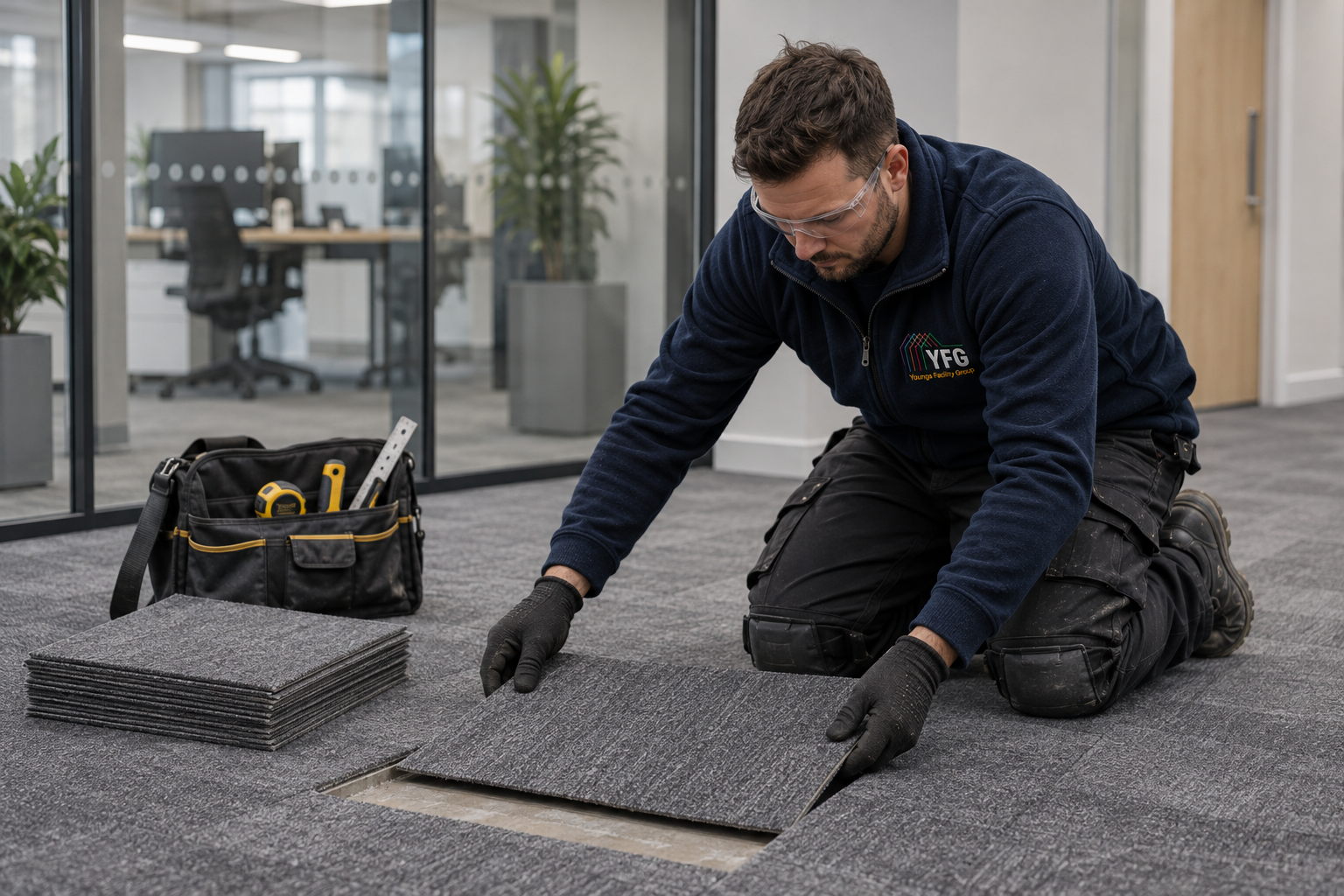
What types of commercial flooring work are included in hard FM?
Hard FM flooring work includes inspecting, repairing and replacing built floor finishes where they affect the condition and use of the premises. Tasks may range from a local patch to a full-room installation. Material choice depends on traffic, cleaning, moisture, slip requirements and the underlying floor.
Youngs' service page advertises repairs, replacement and installation for commercial and public-sector buildings. Confirm the exact material, specification and installation method during a site assessment; the company should not be assumed to install every specialist system.
Key point · 01“
Material choice depends on traffic, cleaning, moisture and slip requirements.
02
Should a damaged floor be repaired or replaced?
A local repair is sensible if the surrounding finish and substrate are sound and a compatible product is available. Widespread failure, repeated lifting or a change in site use can favour replacement. Check the cause before selecting either route: a leak or moving substrate can defeat a new finish.
Youngs can inspect the extent of the damage and quote options. Ask whether a patch will leave a visible join, how long the area will be unavailable and whether the proposal includes preparation and disposal.
Key point · 02“
Check the cause before choosing to repair or replace.
03
What should we do about a trip hazard in a corridor?
Protect or restrict the affected area under site procedures, record the defect and arrange a prompt assessment. The priority increases where the route is busy, an escape route or used by people with mobility needs. A temporary cover is not a substitute for a safe permanent finish.
Give Youngs photographs showing the edge and surrounding floor, plus details of traffic and opening hours. The team can advise whether the fault needs immediate make-safe work or can be repaired during a planned closure.
04
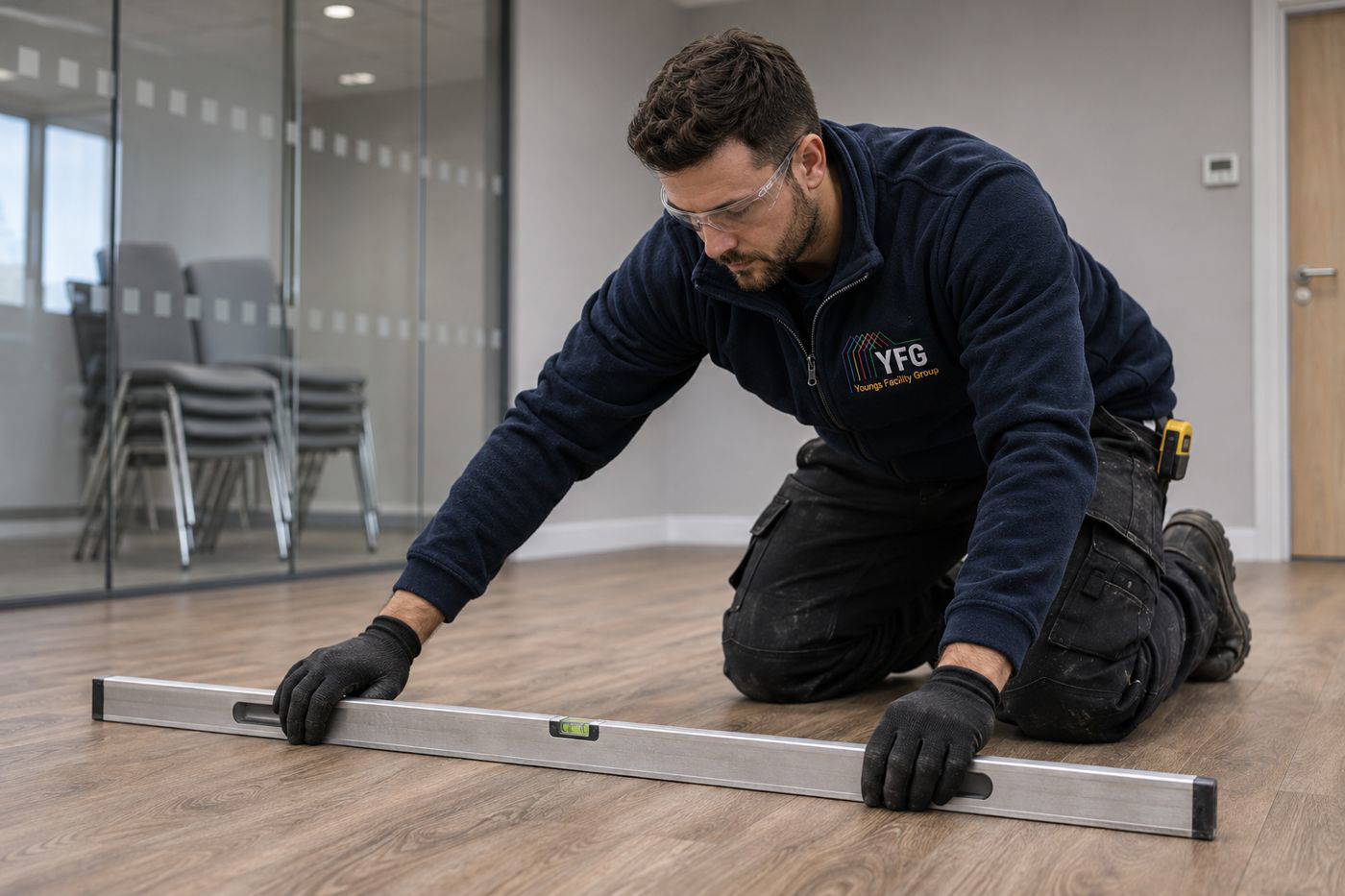
Why does commercial flooring lift or fail early?
Moisture, poor substrate preparation, movement, inappropriate adhesive, heavy traffic and unsuitable cleaning can all play a part. A replacement installed over the same underlying defect may fail again. Investigation should include the floor's age, repair history and nearby leaks.
Youngs can coordinate related plumbing and fabric investigation where needed. Before accepting a quote, ask what surface preparation and moisture checks are included and what assumptions the contractor has made about hidden conditions.
Key point · 04“
New flooring laid over the same defect may fail again.
05
Which flooring is suitable for a high-traffic area?
There is no universal answer. Consider wheeled traffic, wet footwear, cleaning regime, required slip performance, acoustic needs and downtime for installation. Entrance matting and thresholds can also affect how a floor wears and performs.
Youngs can discuss the site's use and practical installation constraints before specifying a finish. Give examples of the equipment, loads and cleaning methods used in the area; the best-looking sample may be the wrong operational choice.
Key point · 05“
The best-looking sample may be the wrong operational choice.
06
Can flooring be replaced while the business stays open?
Often, by phasing rooms or routes and agreeing safe segregation, delivery and curing times. Some systems need longer before furniture or heavy traffic returns. A temporary route must remain suitable for occupants and any required access.
Youngs works in occupied environments, so an installation plan can be built around quieter periods. Confirm who moves contents, where dust or odour could travel and exactly when the repaired area can be handed back.
Key point · 06“
Phasing rooms and routes lets flooring work continue while you're open.
07
Do we need to replace a whole floor after water damage?
It depends on the finish, exposure duration, substrate condition and whether moisture remains trapped. Some local areas can be lifted and reinstated; others require wider removal and drying. Check for hidden damage before covering the surface again.
Youngs' plumbing and flooring services can be scoped together if a leak caused the problem. Ask for separate findings on source repair, drying or assessment, floor preparation and new finish so the sequence is clear.
08
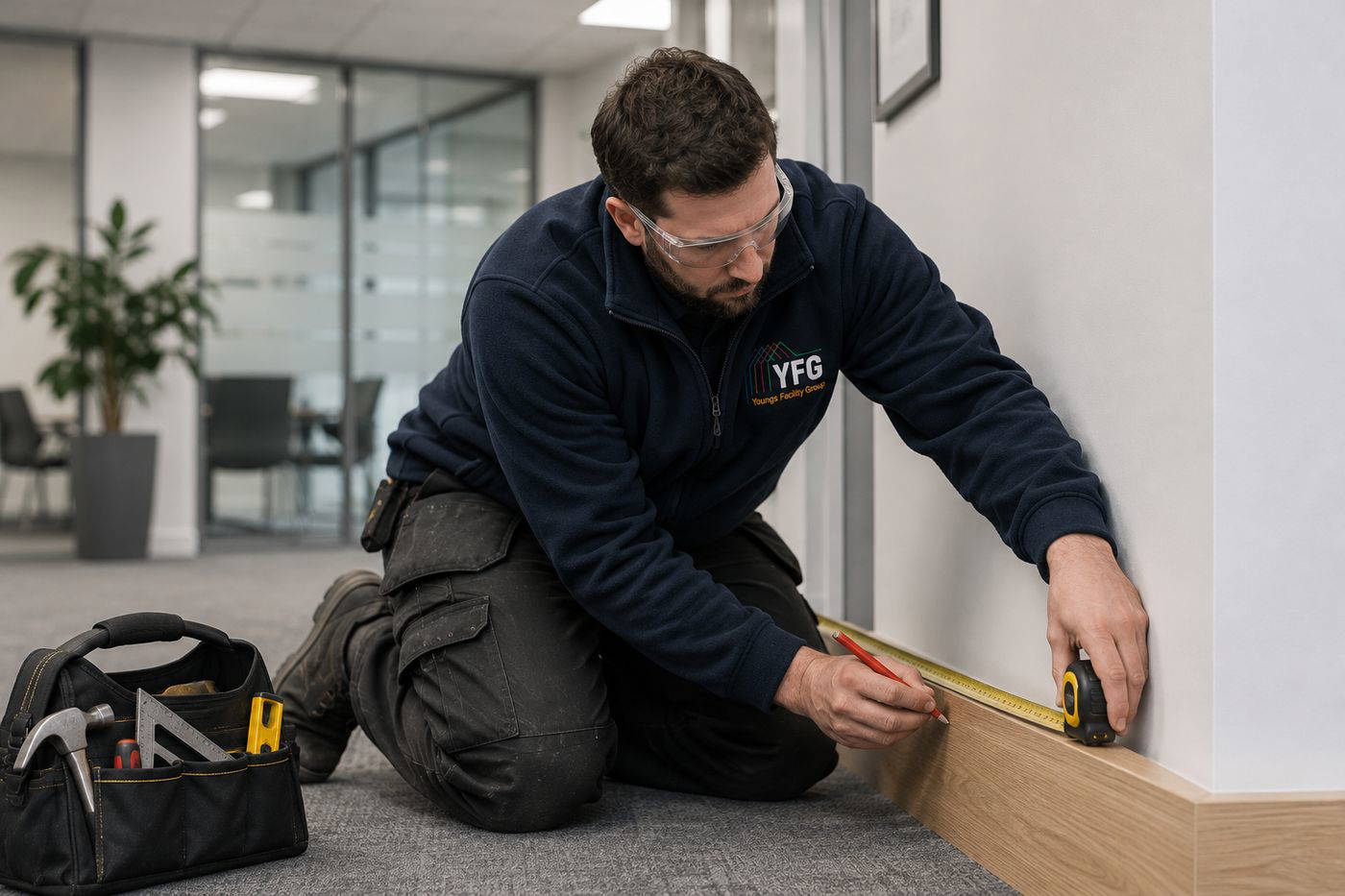
How do we choose slip-resistant flooring?
Match the floor to the foreseeable conditions, including water, grease, dust, footwear and cleaning. Supplier information and suitable testing should inform the specification, but no single product eliminates risk where spills are left unattended or cleaning methods are unsuitable.
Youngs can discuss practical materials and installation, while the building operator should explain the real use of the space. Include entrances, ramps, washrooms and transition areas in the review rather than considering each room in isolation.
Key point · 08“
No single product eliminates slip risk on its own.
09
What should a flooring quotation include?
Look for area and quantities, material and finish, substrate preparation, removal and disposal, trims and thresholds, phasing, protection and estimated time before use. State whether hidden substrate defects are excluded and how variations will be approved.
Youngs can quote against a surveyed scope. Send drawings or measurements if available, but permit inspection where the floor is lifting or damp; those conditions may change the repair method and price.
Key point · 09“
Ask whether hidden substrate defects are excluded.
10
Can a flooring visit be combined with other maintenance?
Yes, especially if doors need adjustment after a floor level changes, skirtings need reinstatement or a leak must be fixed first. Coordination can reduce repeated closures and help ensure one trade does not damage another's finished work.
Youngs' multi-trade offer is suited to these connected jobs. A site manager can submit the whole list and ask for one sequence of work, with distinct approvals for any larger replacement items.
Key point · 10“
Coordination can reduce repeated closures and protect finished work.