
Mechanical & Electrical Maintenance
Commercial Mechanical and Electrical Maintenance Guide
Mechanical and electrical systems keep power, lighting, heating, ventilation and plant working across a commercial site. Their failures can affect safety and operations quickly, so a sensible programme combines inspections, planned servicing and a clear route for fault response.
Youngs supports occupied offices, schools, healthcare settings and industrial buildings with M&E fault finding, maintenance and small upgrades. Its broader hard FM offer can coordinate repairs where system faults damage adjacent building fabric or require other trades.
01
What is included in commercial M&E maintenance?
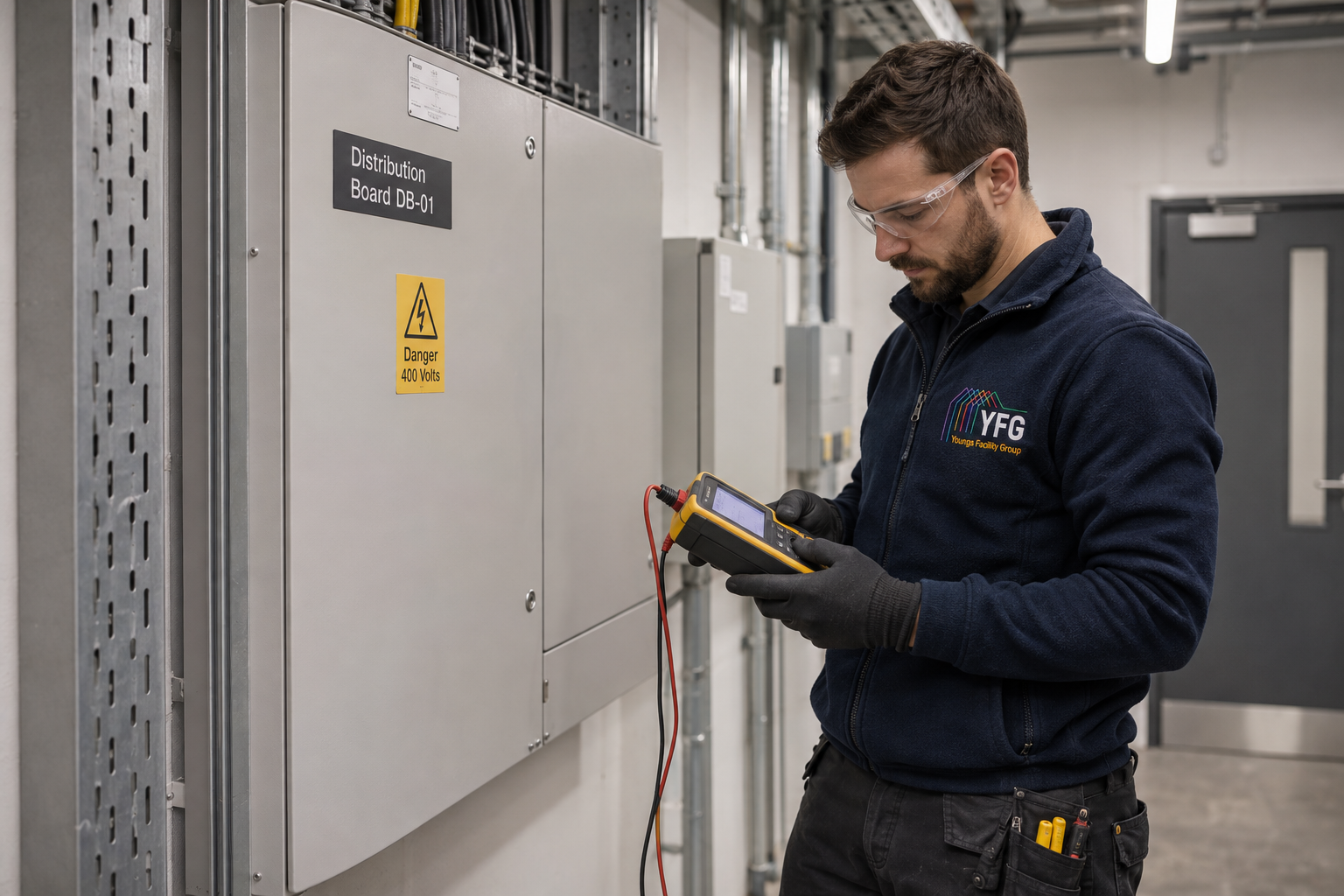
M&E maintenance covers the building's mechanical plant and electrical infrastructure. Typical items include distribution boards, circuits, lighting, emergency lighting, heating plant, pipework, ventilation equipment, pumps and controls. The precise list should be tied to an asset register, with exclusions and specialist equipment identified.
Youngs' advertised M&E service includes planned work and reactive fault finding across these areas. A site review helps distinguish routine serviceable equipment from major replacements or specialist installations that need separate specification and quotation.
Key point · 01“
Tie M&E maintenance to an asset register, with exclusions identified.
02
How often should electrical systems be inspected?
There is no single interval suitable for every electrical asset. Inspection and testing should follow the applicable requirements, installation condition, environment, use and a competent person's assessment. Routine visual checks, planned maintenance and formal inspection reports serve different purposes.
Ask Youngs to review available records and identify which tasks fall within its agreed electrical scope. Keep dates, observations and remedial actions together so a new fault can be assessed against the system's history; do not assume a completed repair replaces a scheduled inspection.
Key point · 02“
No single inspection interval suits every electrical asset.
03
What should we do when a circuit keeps tripping?
A repeating trip may indicate overload, an appliance fault, damaged wiring, moisture ingress or another electrical problem. Stop repeated resets where the fault persists or there are signs of heat, burning or exposed conductors, and make the affected area safe under your site's procedures.
Give Youngs the circuit location, time and circumstances of each trip and any equipment connected. A competent electrician can investigate the cause, isolate the problem and advise whether the remedy is a repair, load change or wider inspection.
04
Can emergency lighting be maintained alongside general lighting?
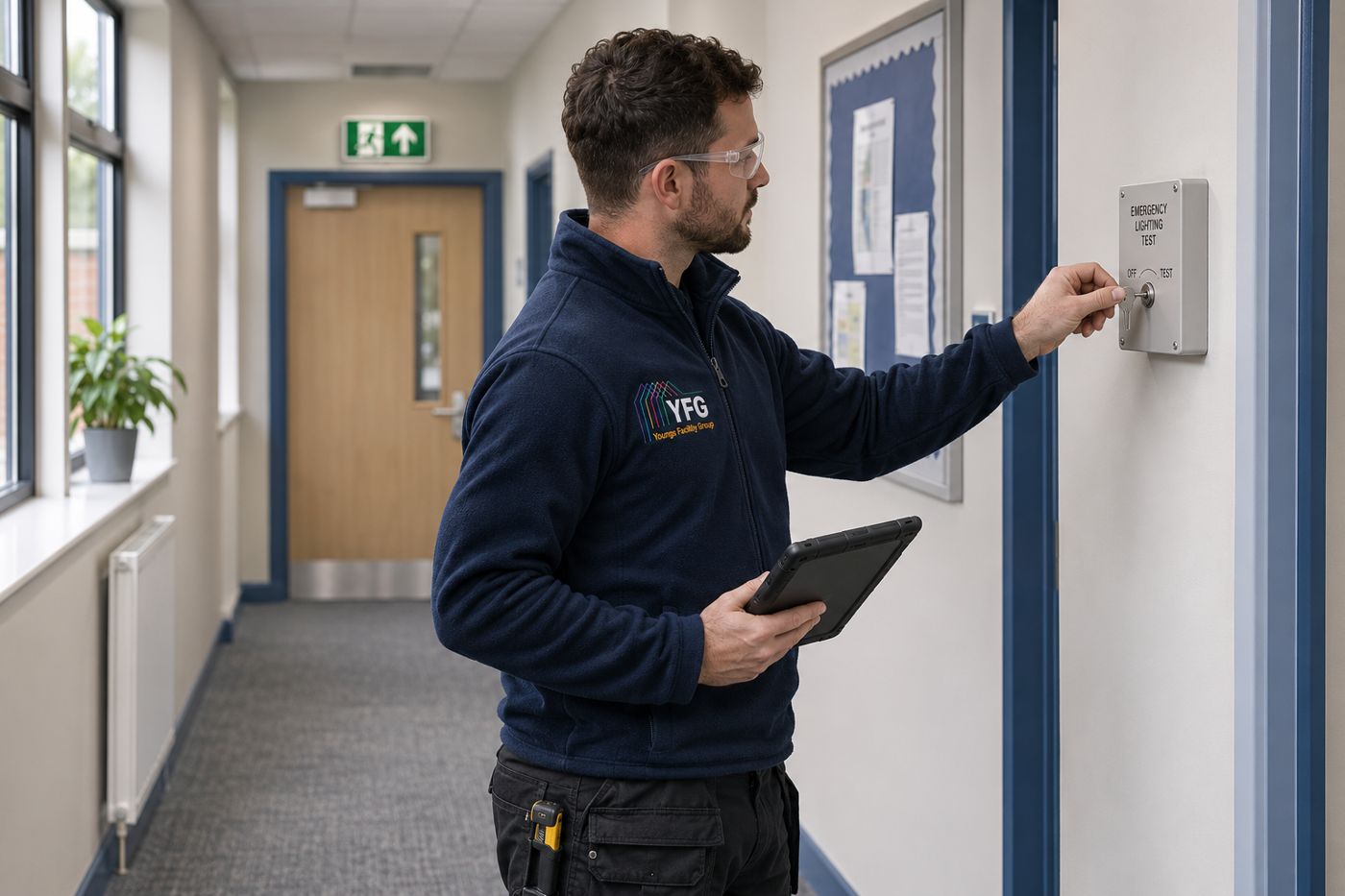
It can be coordinated, but emergency lighting has a different purpose and requires a documented test and maintenance regime appropriate to the building's fire strategy and relevant standards. Failed fittings or batteries should be logged and rectified with priority proportionate to the affected escape route.
Youngs lists both general and emergency lighting within its M&E service. Combining visits may save disruption, provided the schedule, test evidence and defect close-out remain clearly distinguishable from routine lamp and fitting repairs.
Key point · 04“
Emergency lighting needs its own documented test and maintenance regime.
05
When should heating plant be repaired rather than replaced?
Consider age, condition, parts availability, repeat breakdowns, energy performance, capacity and the cost of downtime. A single repair may be economical; repeated failures or an obsolete unit can make replacement a better lifecycle decision. Safe operation and specialist requirements take priority over a simple payback calculation.
Youngs can assess the maintenance issue and discuss next steps with the site team. Request a written diagnosis and options, including interim measures and any related pipework or controls, before committing to major plant expenditure.
Key point · 05“
Repeated failures can make replacement the better lifecycle decision.
06
What causes poor ventilation in a commercial building?
Blocked filters, failed fans, control faults, closed dampers, unsuitable settings or changes in occupancy can all reduce performance. The symptom may be local to one zone or part of a larger system. Occupant reports should be mapped to rooms, times and operating modes.
Youngs' M&E and air-conditioning services can be considered together when investigating ventilation complaints. A useful visit checks the equipment and controls against the actual way the space is used, then separates maintenance faults from design or capacity issues.
Key point · 06“
Map ventilation complaints to rooms, times and operating modes.
07
Can M&E repairs be completed in an occupied building?
Often yes, with a suitable risk assessment, access plan and agreed isolation or shutdown windows. Some work can be undertaken room by room; other tasks require a temporary interruption to power, heating or ventilation. Sensitive environments need closer coordination with the people running the site.
Youngs says it works in live commercial and public-sector buildings. Tell the team about critical operations, vulnerable occupants, security arrangements and restricted areas early so the proposed programme reflects the site's real constraints.
08
How can we reduce repeat M&E breakdowns?
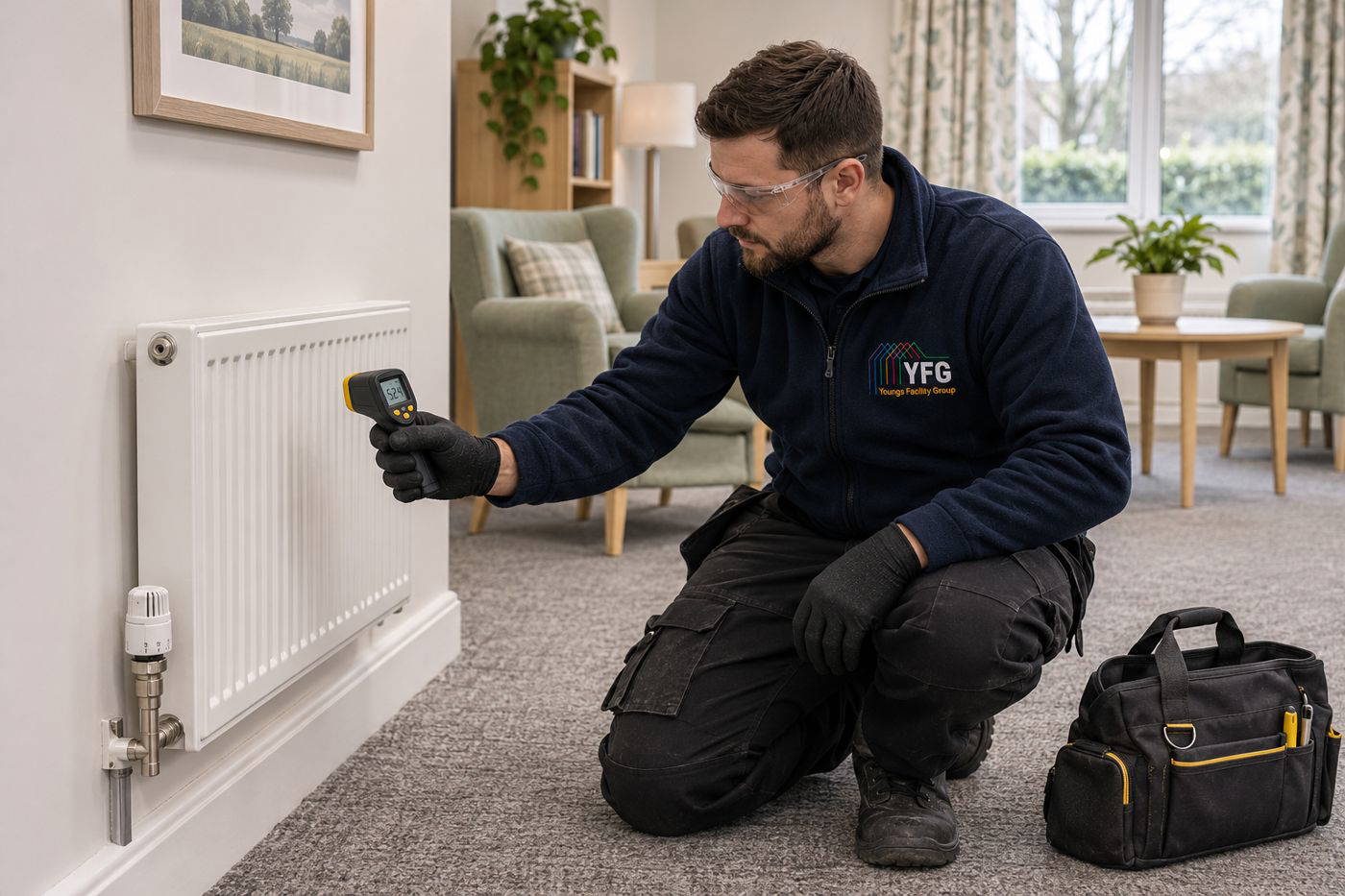
Record faults by asset and cause, rather than closing each ticket in isolation. Repeated trips, leaks, failed bearings or control resets may point to an underlying defect or an unrealistic service interval. Prioritise the assets whose failure would cause the most disruption or risk.
Youngs can pair reactive attendance with planned follow-up recommendations. A concise defect log, photos and maintenance history make it easier to decide which repairs should become planned upgrades and which assets need closer monitoring.
Key point · 08“
Record faults by asset and cause to stop repeat breakdowns.
09
What records should an M&E contractor provide?
Expect a clear account of the asset visited, work done, test or inspection findings where applicable, defects, safety actions and recommended follow-up. Certificates or specialist reports are needed where the specific task calls for them; a generic “job complete” note is rarely enough for an estates record.
Agree the format and recipient of records with Youngs at the outset. A buyer with several sites may also want an outstanding-actions list and a way to distinguish completed repairs from quotations awaiting approval.
Key point · 09“
A generic “job complete” note is rarely enough.
10
Can one contractor coordinate M&E and related building repairs?
Yes. A plant leak may need a plumber, electrician and fabric trade; replacing a fitting may require ceiling access and making good. One coordinator can sequence the trades, but the scope should show who diagnoses, isolates, repairs and signs off each part.
Youngs' wider offer includes plumbing, building fabric and refurbishment as well as M&E. That can be useful for a site manager who needs a workable solution to the entire problem, not several disconnected visits.
Key point · 10“
One coordinator can sequence the trades, but define who signs off.