
Commercial Windows & Doors
Commercial Window and Door Repairs Guide
Windows and doors affect access, weather protection, comfort and security. A stiff door or leaking window may seem minor until it blocks a route or damages the surrounding building. Maintenance should consider the opening as a complete assembly.
Youngs offers commercial window and door repair, replacement, adjustments, hardware, basic glazing and sealing work. It can also coordinate related building fabric and access-control issues within a defined scope.
01
What commercial door faults can be repaired?
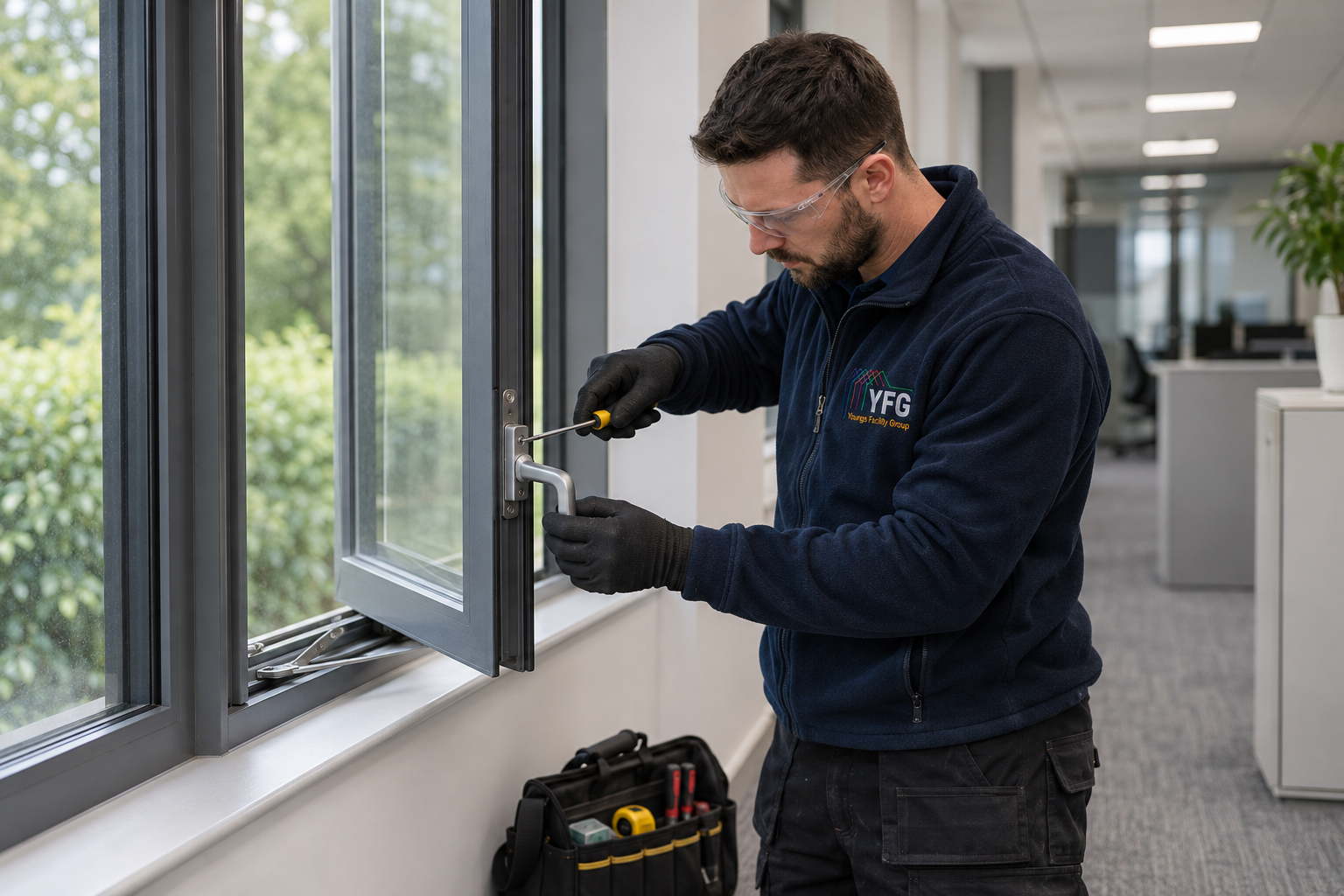
Common faults include misalignment, worn hinges, damaged handles, failed locks, loose frames and defective closers. The right repair depends on the door type and its role in security, escape, accessibility or fire protection. A technician should establish the cause before replacing individual parts.
Youngs advertises repairs to doors, frames and hardware. Provide photographs and describe when the problem occurs; a door that catches only in wet weather may need a different investigation from one with a damaged closer.
Key point · 01“
Find the cause of a door fault before replacing parts.
02
When should a commercial door be replaced?
Replacement may be appropriate if the leaf or frame is badly damaged, repeated adjustments fail, parts are unavailable or the opening no longer suits the building. Any proposed change should consider security, accessibility, fire strategy and compatibility with existing access control.
Youngs can assess repair and replacement options. Ask for a proposal that covers the complete opening, hardware, finishing and any electrical or access-system interfaces, rather than comparing the door leaf alone.
Key point · 02“
Consider the complete opening, not just the door leaf.
03
Can a leaking window be resealed?
Sometimes. Failed seals or perimeter joints may be repairable, but water can also enter through frames, adjacent masonry, roof details or condensation. Find the source before applying sealant, or the visible leak may return.
Youngs lists basic glazing and sealing works as well as window repairs. Share where staining appears and under what weather conditions; the team can advise whether a local repair fits its service or a more detailed envelope investigation is required.

04
How do we deal with a broken window in an occupied building?
Isolate the area, protect occupants from glass and weather, and secure the opening under site procedures. The first visit may make the area safe; replacement glazing or a new frame may require measuring and ordering. Urgency depends on location, access and security impact.
Give Youngs the opening's approximate dimensions, floor level, access restrictions and photos taken safely. State if the building must remain operational overnight so temporary protection can be considered in the response.
Key point · 04“
Isolate the area, protect occupants and secure the opening.
05
Do access-control faults require a door contractor or a systems contractor?
They may require both. A door that fails to latch can be a mechanical alignment problem, while a reader, lock release or controller fault is electronic. The interface matters: changing one component without checking the other can leave an unreliable entrance.
Youngs offers both commercial door work and access-control support. Describe the symptom from both sides of the door and whether manual operation works; this helps coordinate the right investigation.
Key point · 05“
Access-control faults may need door and systems expertise.
06
How often should commercial doors and windows be checked?
Check frequency should reflect use, exposure, condition and the opening's critical role. A busy entrance needs more attention than a rarely opened store window. Site teams should also report new sticking, damage, water ingress or unreliable locking between planned visits.
Youngs can include openings in a planned fabric visit. A door schedule with locations and known defects helps prioritise repairs and distinguish routine wear from safety-critical problems.
Key point · 06“
Busy entrances need more attention than rarely used windows.
07
Are fire doors treated differently from ordinary doors?
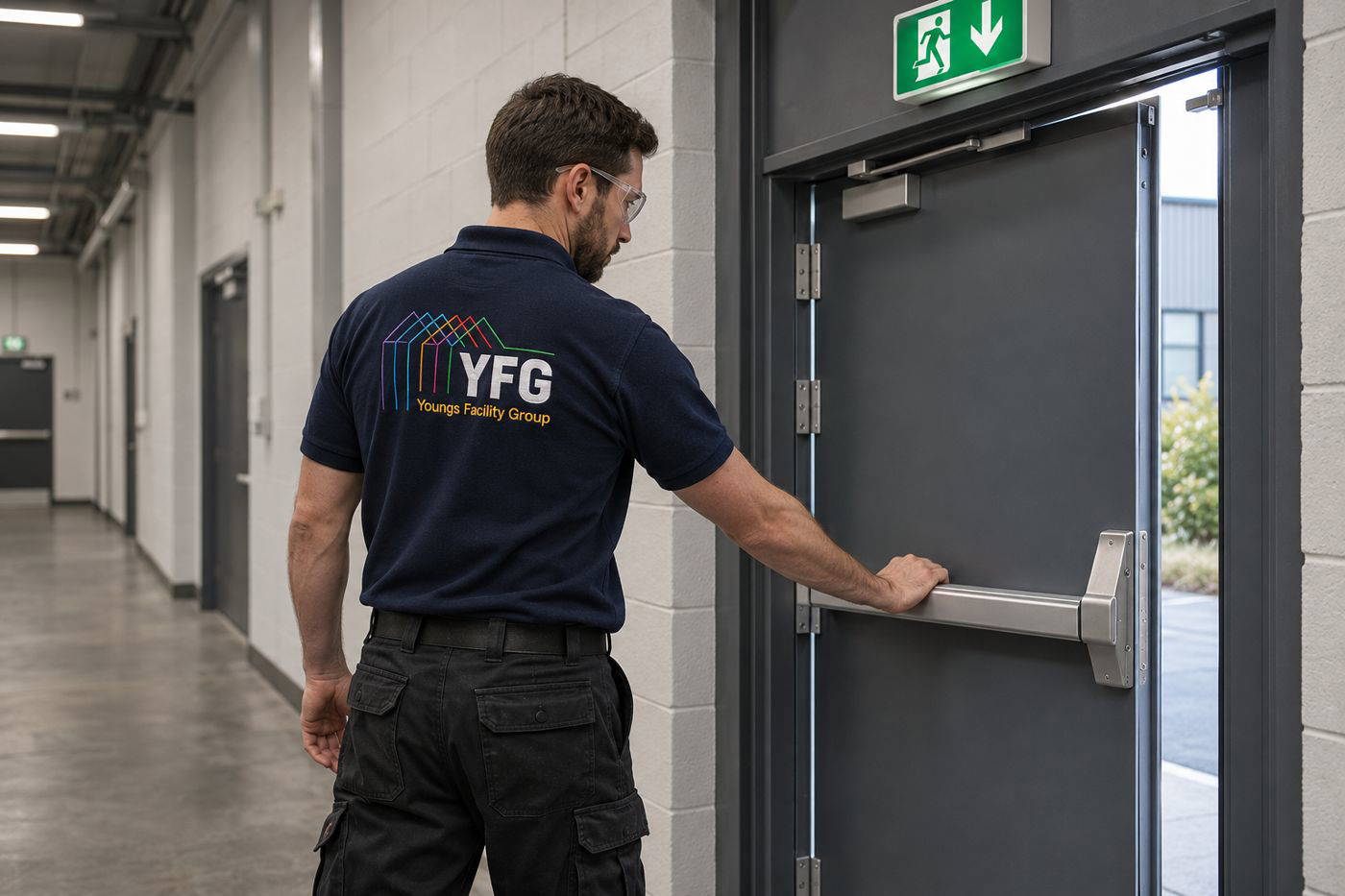
Yes. Fire doors are complete tested assemblies, and inappropriate alterations can undermine their function. A competent assessment should consider the door, frame, seals, glazing, closer and ironmongery together, along with the building's fire arrangements.
Discuss the specific door with Youngs and confirm the competence, components and documentation required for the proposed work. Do not replace a labelled fire-door component with an ordinary fitting for convenience.
08
Can window and door repairs improve energy performance?
Closing gaps, restoring seals and ensuring openings shut correctly can reduce draughts and unwanted heat loss. Larger gains may need replacement or broader envelope work. A repair should still preserve safe ventilation and the opening's required function.
Youngs can assess visible defects and coordinate related fabric work. Ask for the likely operational benefit of a repair, but avoid promising a specific energy saving without a building-level assessment.
Key point · 08“
Restoring seals can reduce draughts and unwanted heat loss.
09
Can work be phased around a live school or office?
Yes, often one entrance or room at a time, with a safe alternative route and clear temporary security. Work at main entrances needs coordination with deliveries, visitors and access procedures. Some openings cannot be taken out of use during normal hours.
Youngs works in occupied education and commercial buildings. Share peak arrival times, protected areas and access-control rules so the installation sequence is practical.
Key point · 09“
Phase the work one entrance or room at a time.
10
What should we include in a window or door repair request?
Provide the opening's location and use, dimensions if known, photos, type of fault, any security or fire-door designation and when access is possible. Say whether the opening can still close and lock. These details help triage urgency and identify likely materials.
Youngs can then advise whether a repair, temporary make-safe or replacement survey is the sensible next step. For several defective openings, send a numbered schedule rather than separate vague messages.
Key point · 10“
Send a numbered schedule, not separate vague messages.