
Commercial Plumbing & Drainage
Commercial Plumbing and Drainage Maintenance Guide
A water leak or drainage failure can close facilities, damage finishes and interrupt work. Commercial plumbing maintenance should find the underlying cause, make the area safe, restore use and prevent the same fault returning where practical.
Youngs' plumbing and drainage service sits within its multi-trade hard FM offer. That matters when a repair also needs ceilings, floors or walls opened and reinstated, particularly in occupied premises where a sequence of separate contractors adds disruption.
01
What commercial plumbing work falls under hard FM?
It includes maintenance and repairs to water distribution, sanitary fittings, valves, pipework and associated building services, plus investigation of leaks and faults. Drainage support can cover internal waste systems and other drainage issues within an agreed scope. Some specialist systems require separate competent contractors.
Youngs advertises reactive plumbing repairs, planned maintenance and drainage support. Define the boundary between landlord infrastructure, tenant fittings, external networks and specialist water hygiene tasks before agreeing an ongoing service.
Key point · 01“
Define the scope's boundaries before agreeing an ongoing plumbing service.
02
What should we do first if there is a leak at work?
Protect people and equipment, isolate the affected water supply if safe and follow the building's emergency procedure. Keep water away from electrical equipment and avoid using any affected installation until it has been assessed. Record where the water appears and whether the leak is continuous or only happens during use.
When contacting Youngs, share photographs, the nearest isolation point, the floor or room affected and any ceiling or floor damage. Prompt isolation limits damage; the permanent repair still needs diagnosis of the source and an appropriate check before the area is reinstated.
Key point · 02“
Protect people, then isolate the supply if safe.
03
How do you find a hidden plumbing leak?
The first step is to distinguish supply, waste, condensation and rainwater ingress. A contractor may inspect accessible pipework, valves, meters, fittings and nearby building fabric, then use targeted investigation where the source is concealed. Staining alone does not always identify where water entered.
Youngs can coordinate plumbing investigation with building fabric repairs in its scope. Agree before opening walls or ceilings how access will be made, what testing is proposed and how making good will be priced.

04
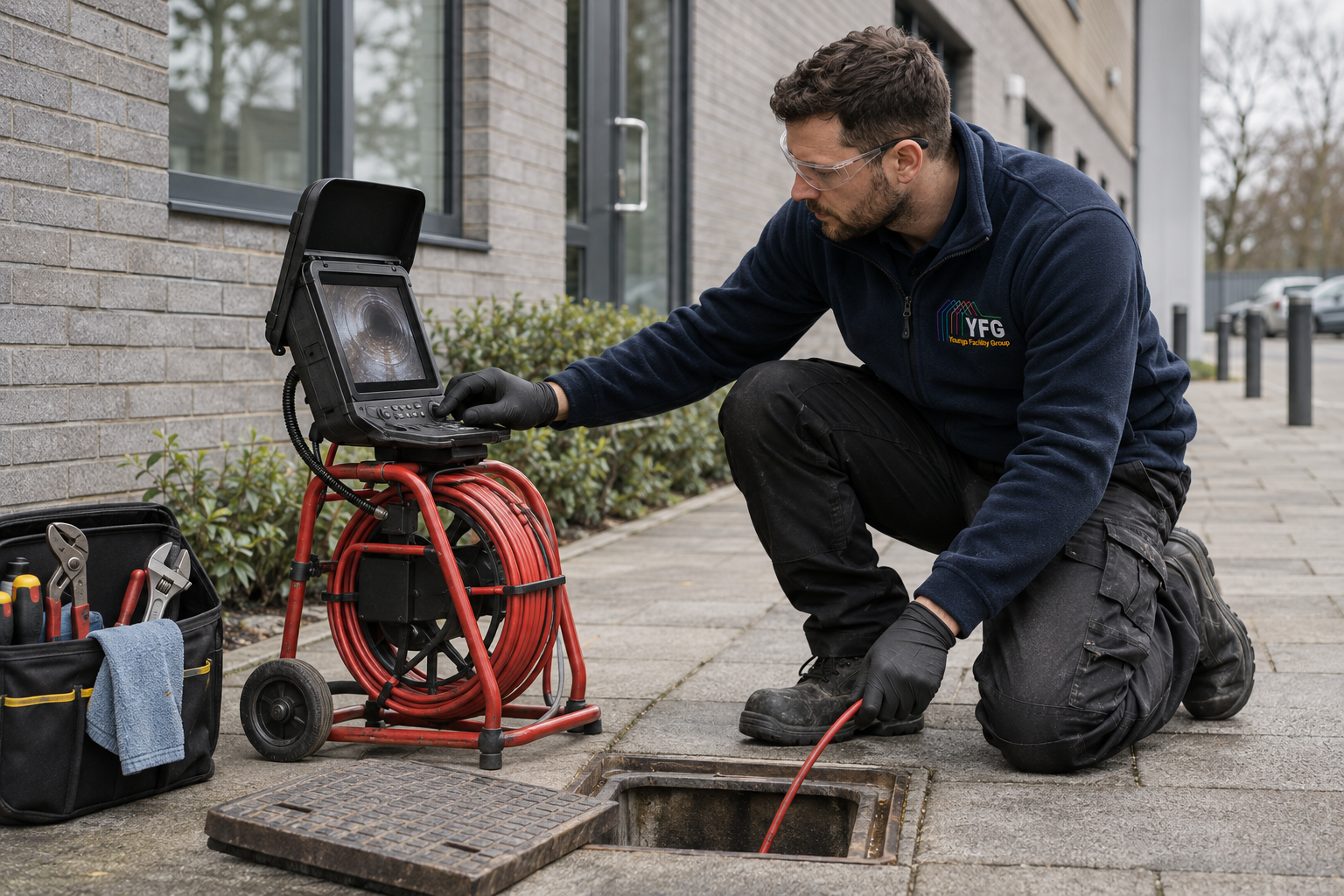
What causes recurring blocked drains in commercial premises?
Common causes include unsuitable material entering the system, grease or scale, damaged pipework, poor falls and repeated use beyond the system's capacity. A one-off clearance restores flow but may not address a recurring structural or operational cause.
Keep a record of the affected outlets and previous clearances. Youngs can assess the issue within its drainage service and advise when further investigation or a specialist survey is needed. In kitchens or high-use washrooms, maintenance and user practices may both need attention.
Key point · 04“
A one-off clearance may not fix a recurring cause.
05
When is a drain issue an emergency?
Prioritise sewage backflow, widespread loss of drainage, flooding, water close to electrics and any condition that makes essential toilets or clinical facilities unusable. Isolate affected fixtures, restrict access and follow site procedures while arranging attendance. A small slow-draining sink may be suitable for a planned visit.
Tell Youngs exactly what is affected, whether the building is occupied and whether the problem is spreading. A realistic triage call helps distinguish immediate make-safe work from a permanent solution that needs additional materials or access.
Key point · 05“
Prioritise sewage backflow, flooding and water close to electrics.
06
How can plumbing maintenance prevent water damage?
Regular checks of visible pipework, valves, fittings and known weak points can catch small leaks before they become larger losses. Asset information and isolation plans are especially valuable in older buildings, where a failure can be hard to localise quickly.
Youngs can combine planned checks with other maintenance visits where suitable. Ask for a record of defects, photographs and a priority for each recommendation, so a worn fitting is not forgotten until it fails behind a finished wall.
Key point · 06“
Regular checks catch small leaks before they become larger losses.
07
Does plumbing maintenance cover water hygiene and legionella?
Some maintenance tasks support a water management programme, but legionella risk assessment, control and monitoring have their own responsibilities and competence requirements. The person in control of the premises must understand the risk and appoint competent help where needed; a routine plumbing repair is not itself a complete water hygiene programme.
Ask Youngs which tasks it can deliver directly or coordinate and which require a specialist. Keep the water risk assessment, schematic, monitoring records and remedial works aligned, especially where outlets are added, removed or left unused.
08
Can plumbing work take place while a building remains open?
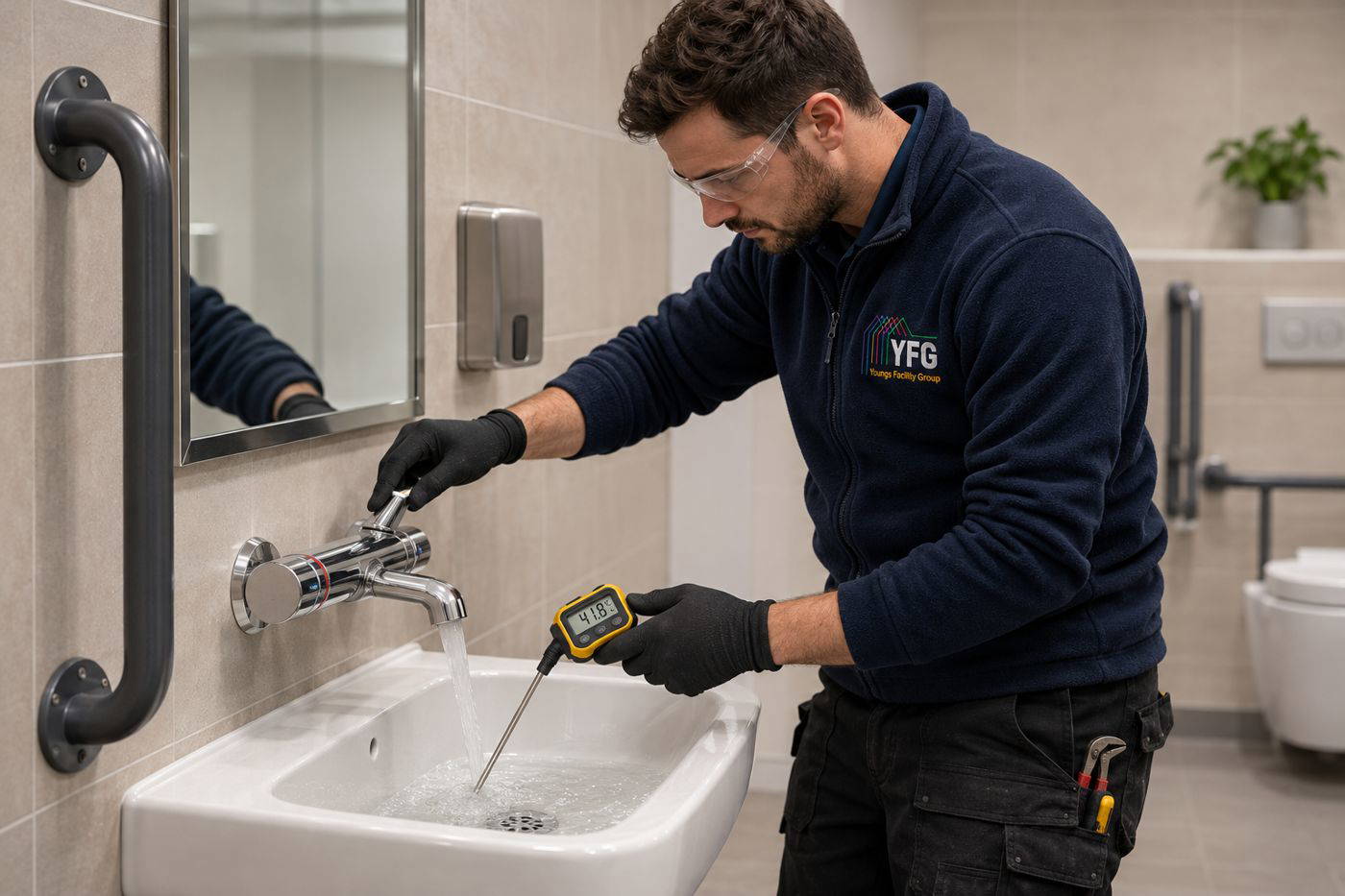
Often it can, with agreed isolation windows, temporary facilities and careful control of access. A washroom bank, ward or production area may need phasing so the whole site does not lose service at once. The plan should cover noise, water interruption, hygiene and reinstatement.
Youngs works in occupied environments across several sectors. Give the team the building's peak periods, critical outlets and site rules before work starts, and ensure users know when a service is temporarily unavailable.
Key point · 08“
Phase plumbing work so the site doesn't lose service at once.
09
Who repairs damage after a plumbing leak?
The plumbing repair stops the source; the full job may also include drying, electrical checks, ceiling repairs, decoration or floor replacement. Responsibilities can differ between owner, tenant, insurer and contractor, so document the cause, damage and authorised scope.
Youngs offers fabric and flooring work alongside plumbing and can discuss a coordinated repair. Ask for the estimate to separate urgent isolation, permanent pipework repairs and reinstatement, especially if an insurance claim is involved.
Key point · 09“
The full job may include drying, ceiling and floor repairs.
10
What information helps a contractor quote drainage work?
Provide the site address, drawings if available, location and number of affected fixtures, symptoms, frequency, photos and previous repair records. State whether access chambers are available and whether the premises can tolerate a shutdown. A site visit may still be necessary where the cause is hidden.
Youngs can then propose the likely investigation and repair route within its advertised scope. For a recurring problem, ask what evidence will distinguish a simple blockage from a defect requiring a larger project.
Key point · 10“
Photos, symptoms and repair records help a contractor quote.